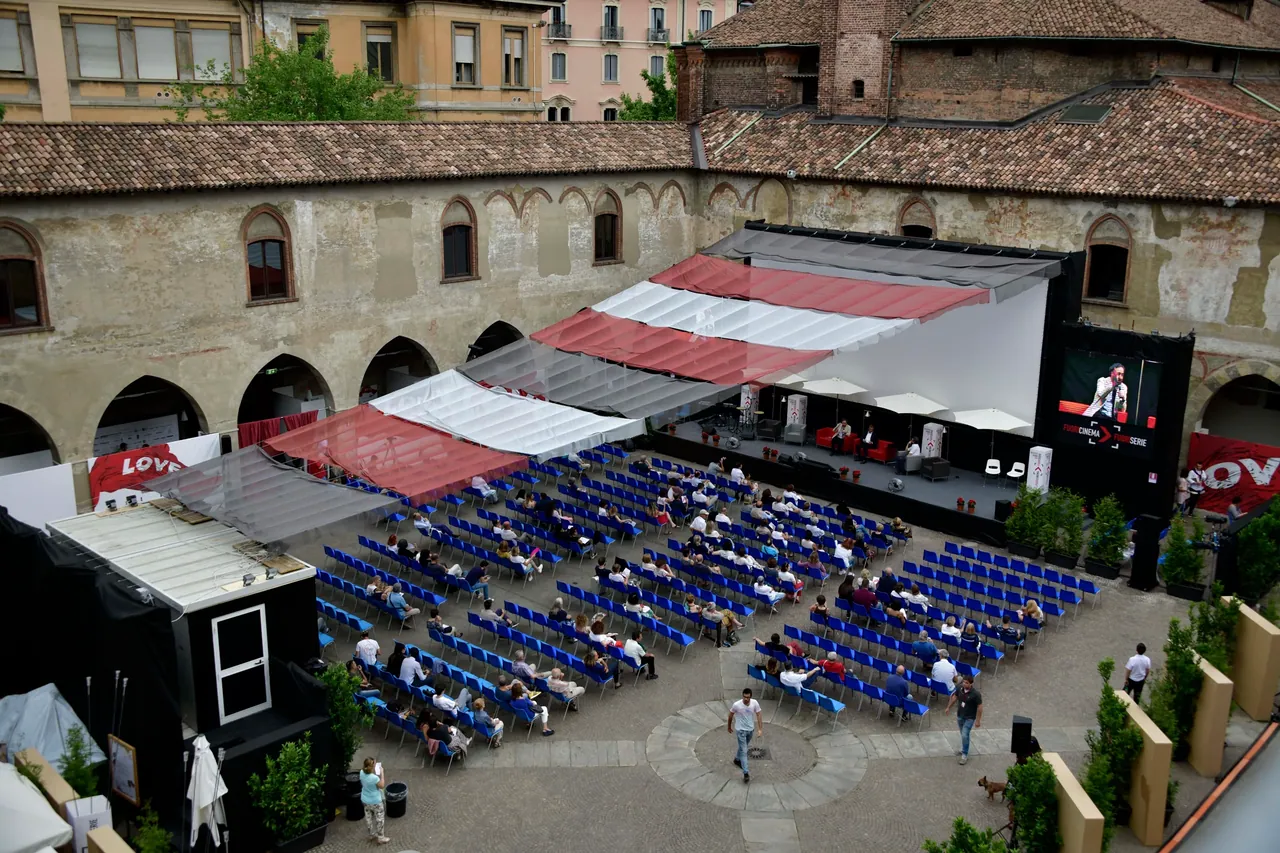
When a company organises a complex project, it has two options. The first: choose the venue, the stand builder, the audio and lighting crew, the catering, the graphics and the transport on its own, and coordinate them. The second: hand everything to a main contractor, who signs a single contract with the client and answers for every supplier.
On paper the first option looks cheaper, because you negotiate directly with each one. In practice the real costs lie elsewhere.
The time of whoever coordinates
Many suppliers mean as many quotes to compare, contracts to sign, invoices to check and people to call every time a schedule changes. That work falls on someone in the company who usually already has another job. With a main contractor, that person has a single point of contact, from the brief to the last light switched off.
The risk when something goes wrong
In a real project something always changes: a delayed flight, a speaker who drops out, a room smaller than expected. If each supplier answers only for itself, everyone defends their own piece and the problem is left halfway. With a main contractor, accountability is written into the contract: they answer for it, and the client does not have to act as referee.
The costs you only see at the end
Budget surprises arise in the gaps between one supplier and the next: the transport nobody had planned for, the extra hour of set-up, the print run redone because the measurements had changed. A main contractor works on a single budget, tracks every cost from quote to final account and flags variances while they can still be corrected.
A consistent result
The audience does not see the suppliers. It sees one experience: the invitation, the arrival, the room, the stage, the message. If every piece is designed by someone different, it shows. A single direction holds together the tone, the timing and the details, and that is what people remember.
When it makes sense
You do not always need a main contractor. For a dinner with one supplier, no. You need one when many skills are involved, when timelines are tight, when the project takes place in several locations or countries, and when whoever commissions it wants to focus on the result rather than the logistics.
It is how we work at BetterNow: one point of contact, one contract, the best suppliers. We choose them, and we answer for them.
 By Cristina PepeFOUNDER & OWNER